LiftMaster & myQ Smart Opener Service in OKC: What Actually Needs Servicing
Published August 26, 2026 · Written by Abdul, Lead Technician · Open Sesame Garages OKC
A smart garage door opener needs servicing once a year in a home and two to four times a year on a commercial bay — and the app is the least important thing on the checklist. A proper visit starts with door balance, then the safety sensors and reversal test, then force and travel settings, the drive system, and the battery backup, and only then myQ, the remotes, and the keypad. The reason is simple: an opener straining against an unbalanced door fails years early no matter how good its Wi-Fi is.
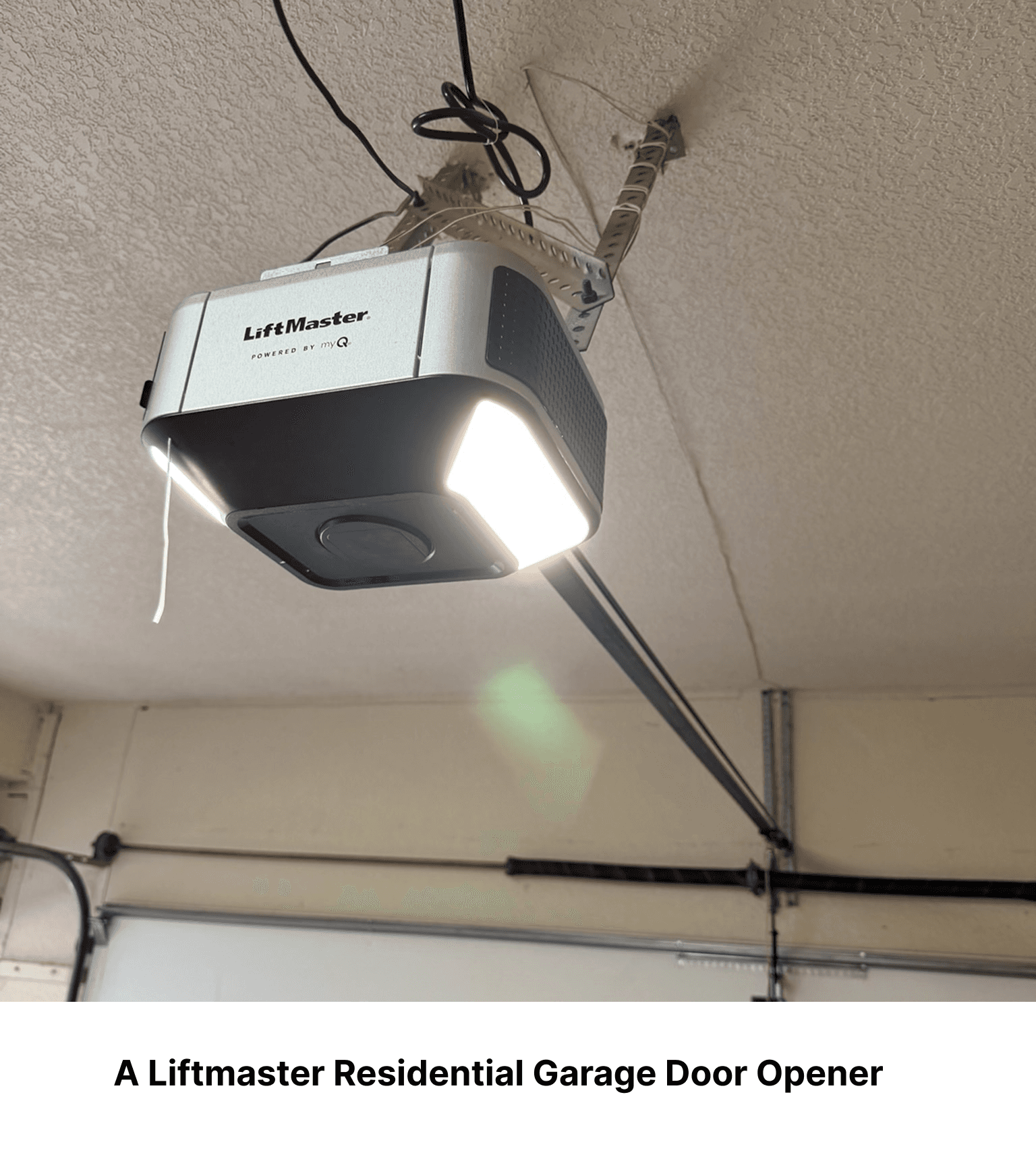
Smart opener calls almost always arrive as software problems. The app stopped showing the door. The notification never came. A new router went in and now nothing works. Then the technician gets on the ladder and finds a door that has not been balanced in nine years, a close force turned up to compensate for it, and a battery backup that died two summers ago.
None of that means the smart features are pointless — a LiftMaster with myQ and battery backup is genuinely more useful in Oklahoma than a basic unit, because we lose power often enough for it to matter. It means the connected layer sits on top of a mechanical system, and the mechanical system is what actually breaks.
What a smart opener service visit covers, in order
This is the sequence, and the sequence is the point. Each step tells you whether the next one is even worth doing.
1. Door balance — before anything electronic
With the opener disconnected, the door should hold roughly where you let go of it at waist height. An unbalanced door makes the opener carry weight the springs are supposed to carry, and that is the single fastest way to strip a drive gear or burn out a motor. A brand-new smart opener installed on an unbalanced door is a brand-new opener with a shortened life.
2. Safety sensors and a live reversal test
Both photo eyes cleaned, aimed, and verified with an actual obstruction. This matters more on a smart opener than a basic one, because app control and timer-to-close mean the door can move when nobody is standing there. The sensors are the only thing watching the doorway during a remote close.
3. Force and travel settings
The door should seal at the bottom without grinding into the concrete and stop cleanly at the top. Close force set no higher than the door actually needs, and a reversal test against a solid object on the floor. Settings that have been cranked up over the years to compensate for a mechanical problem are a common and dangerous find.
4. Drive system and hardware
Chain or belt tension, the rail and trolley, the drive gear, and the sprocket. Then the door itself — rollers, hinges, cables, drums, track bolts, and a look at the springs for gaps and rust. Most of what people call opener noise is actually door noise.
5. Battery backup under load
Backup batteries are consumables with a service life measured in a few years, and Oklahoma garage temperatures shorten it. A battery is tested under load, not just checked for an indicator light, and replaced when it no longer holds a charge. Finding this out during an ice storm is the wrong time.
6. Remotes, keypad, wall control — and old codes
Every remote and keypad tested and reprogrammed as needed, and the learn-button generation identified so replacement remotes actually match. This is also when old codes get cleared: a sold vehicle with a HomeLink pairing, a lost remote, a former tenant, a contractor who had the keypad code.
7. Connectivity, last
myQ verified, signal strength measured at the motor unit rather than at the kitchen counter, and the app reconnected after a router or ISP change. It is last on the list on purpose. A door that closes safely without the app is a working door; a door that opens from a phone but is out of balance is a countdown.
The six faults we see most on LiftMaster and Chamberlain units
Motor hums, chain or belt does not move
Classic stripped nylon main drive gear, or a broken spring the opener cannot lift. Both present the same way from the doorway, and the distinction matters: one is a gear kit, the other is a spring job and the opener is fine. Check whether the door lifts by hand after disconnecting the trolley.
Door reverses immediately and the lights flash
On Chamberlain-family openers this is the safety-sensor path — blocked, misaligned, dirty, or a broken sensor wire. Ten flashes of the overhead light is the specific sensor code on many models. Newer units also display a two-digit blink code on the motor unit LEDs; that code narrows it down considerably before anyone touches a screwdriver.
Everything worked, then a storm rolled through
Surges take out logic boards, and in Oklahoma this is a genuinely seasonal category of call. The tell is a partial failure: the door runs from the wall button but not the remotes, or the Wi-Fi never comes back while everything else works. A surge protector on the opener circuit is cheap insurance.
myQ will not connect or dropped off the app
myQ is 2.4 GHz only, so a router that combines both bands under one name is the most common cause. A new router, a new ISP, or a mesh system with band steering will all break a connection that had worked for years. Detached garages are the other big one — the fix there is a mesh node in the garage, not a new opener.
Opener beeping with the power on
Usually the battery backup announcing that it is low or finished. Beeping during an outage means the unit has switched to battery. A short run of beeps with a flashing light before the door moves on its own is the required warning for an unattended close from the app or a timer.
Door opens a few inches and stops, or opens fine but will not close
Opens-and-stops points at springs or travel limits. Opens-but-will-not-close points at the sensors, because the safety system only governs the closing direction. That single distinction saves a lot of guesswork.
Diagnostic blink codes differ by model and generation, so read the code table in your manual or on the label inside the motor unit cover rather than trusting a number you found online. Getting the actual code before you call is the single most useful thing you can do for a diagnosis — it frequently determines which parts ride out on the truck.
Is Your Garage Door Opener Acting Up?
From stripped gears and damaged circuit boards to myQ connection problems and overdue maintenance, Open Sesame Garages can diagnose the problem and get your opener working properly again.
Serving Oklahoma City, Edmond, Norman, Moore, Midwest City, Yukon & Mustang
The myQ questions, answered plainly
myQ runs on 2.4 GHz Wi-Fi only. That is not a limitation to work around so much as a design choice that favors range over speed, which is the right trade for a device bolted to a garage ceiling. Nearly every failed setup traces back to one of four things:
- A router broadcasting both bands under one network name, so the phone hands the opener a 5 GHz connection it cannot join. Split the bands, or turn off 5 GHz for the few minutes setup takes.
- Weak signal at the ceiling. Check the bars standing next to the motor unit, not in the kitchen. A detached garage across a yard usually needs a mesh node or an access point — and that fixes it permanently, where restarting the app does not.
- A new router or ISP. The opener keeps the old credentials until it is told otherwise, which is why the door quietly vanishes from the app weeks after the switch.
- Client isolation on a guest or IoT network, which stops the phone and the opener from seeing each other during pairing.
If the Wi-Fi LED on the motor unit never blinks during a setup attempt, stop troubleshooting the network — the module is not starting, and that is a hardware conversation. One more note worth having before you buy an opener for a specific feature: the list of supported third-party voice and home-automation integrations has changed more than once over the years, so confirm what is currently supported rather than assuming an integration you read about is still live.
Repair or replace: where we draw the line
| Situation | Usually the right call |
|---|---|
| Stripped drive gear, opener under ~15 years, sound rail and board | Repair — gear kit |
| Logic board fried by a surge, otherwise healthy modern unit | Repair — board replacement |
| Sensors, wiring, remotes, keypad, wall control | Repair — nearly always |
| Battery backup no longer holding charge | Repair — replace the battery |
| Opener 15+ years old with a second major failure | Replace |
| No battery backup, no connectivity, and a failing drive | Replace |
| Chain drive on a bedroom-adjacent garage, still working | Optional upgrade to belt drive |
| Low headroom or a need to free up ceiling space | Wall-mount jackshaft opener |
General guidance, not a quote. The condition of the door itself moves several of these rows, which is why the balance test comes first.
Commercial smart operators
On a commercial bay, the useful half of “smart” is not opening the door from a phone — it is knowing. Knowing that a bay failed to close at the end of a shift, knowing which door is cycling far more than the others, knowing that an operator has started drawing more current than it used to. That information turns unplanned failures into scheduled ones.
Commercial operators — jackshaft, trolley, and hoist units on rolling steel and sectional bays — also carry their own safety devices, often including a reversing edge on the bottom bar alongside the photo eyes, and their own diagnostic displays. Service intervals are set by cycle count rather than the calendar, and we schedule around operating hours so an hour of planned downtime does not become a day of the unplanned kind. If you run multiple doors, see commercial garage door service in OKC.
The security half nobody asks about
A garage door is a door into the house, and an opener is a set of keys. Rolling-code systems changed the picture enormously — modern openers use a code that changes with every press, which retired the old code-grabbing attacks. But the practical gaps are rarely technical:
- Codes that were never cleared: a sold car with a HomeLink pairing, a lost remote, a former tenant, a contractor who was given the keypad code and never had it changed.
- The emergency release cord reachable through the gap at the top of the door with a coat hanger — a genuine and well-documented method of entry on doors with a large gap and a long cord.
- The interior door from the garage into the house left unlocked, which turns a garage entry into a house entry.
- A keypad code that is a house number, an address, or a birth year.
- App accounts still shared with someone who no longer lives there.
Clearing old codes takes about a minute and is part of any service visit we do. Ask for it if it does not come up.
Frequently Asked Questions
Do you service LiftMaster openers you did not install?
Yes. Open Sesame Garages services LiftMaster, Chamberlain, Genie, and the major private-label openers regardless of who installed them, residential and commercial, across the OKC metro. Bring the model number if you have it — it is on a label on the side or back of the motor unit — and it speeds up the parts question considerably.
How often should a smart garage door opener be serviced?
Once a year for a home, and two to four times a year for a commercial door cycling dozens of times a day. Cycle count drives wear far more than the calendar does. Between visits, run the balance test and the sensor reversal test yourself once a month — both take under two minutes.
Why will my LiftMaster myQ not connect to Wi-Fi?
myQ requires a 2.4 GHz network. The most common cause is a router broadcasting both bands under a single name, which hands the opener a 5 GHz connection it cannot use. Split the bands or disable 5 GHz during setup, confirm the signal is strong at the motor unit itself, and re-run the pairing. If the Wi-Fi LED never blinks during setup, the module or the board is the problem rather than the network.
Is a stripped drive gear worth repairing?
On a unit under roughly fifteen years old with a sound rail and board, yes — a gear kit is a fraction of a new opener and it is a routine job. Past that age, with a failed board, no battery backup, and no connectivity, the arithmetic usually favors a current belt-drive unit over three separate repairs. We will tell you which side of that line your opener is on rather than quoting both and letting you guess.
What is the difference between LiftMaster and Chamberlain?
They come from the same manufacturer, with LiftMaster sold through professional dealers and Chamberlain through retail. Internals and parts overlap heavily, which is why a technician who services one services the other. The professional line typically offers heavier-duty and commercial options that the retail line does not.
Can you install a smart opener on my existing door?
Usually yes, provided the door is sound and properly balanced. That check comes first, because installing a new opener on a door with worn rollers, tired springs, or a balance problem passes the underlying fault straight to the new unit. If the door needs work, you get told that before the opener is ordered.
Do you service commercial LiftMaster operators?
Yes — commercial jackshaft, trolley, and hoist operators on warehouse bays and rolling steel doors, including their safety devices and monitoring options. For businesses with multiple bays, scheduled service based on cycle count costs materially less than emergency calls, and it is normally scheduled outside operating hours.
Should I upgrade to a battery backup opener?
In Oklahoma, it is one of the more genuinely useful upgrades on the list. Ice storms and straight-line winds take power out often enough that a garage door which still works during an outage is a real feature, not a spec-sheet line. The alternative is pulling the release and lifting 150 to 350 pounds by hand, which is exactly when people discover their door is not balanced.
Is Your Garage Door Opener Acting Up?
From stripped gears and damaged circuit boards to myQ connection problems and overdue maintenance, Open Sesame Garages can diagnose the problem and get your opener working properly again.
Serving Oklahoma City, Edmond, Norman, Moore, Midwest City, Yukon & Mustang
Sources
- DASMA Automatic Garage Door Opener Safety & Maintenance Guide — the balance test, the obstruction reversal test, and the recommended maintenance routine for automatic openers.
- DASMA, “Safety Tips For Garage Door Systems” — monthly homeowner checks plus an annual visit from a trained technician.
Related reading
- LiftMaster garage door opener repair & service in OKC›
- Why won’t my LiftMaster myQ opener connect to Wi-Fi?›
- Why is my LiftMaster garage door opener beeping?›
- How often should a smart garage door opener be serviced?›
- How long do garage door openers last?›
- Why is my garage door opener remote not working?›
- Garage door sensor blinking? What each light means›
- Commercial garage door repair & overhead installation›